05 / 06Solo Project
A word puzzle,
Play this week's puzzle ↗
Word puzzles sound simple. Four groups of four words. But the design space is deceptively deep.
The real challenge is intentional misdirection. Take IRON, PRESS, CURL, BENCH, all things you do at the gym. But PRESS also fits a medieval weapons category. IRON fits things you can flip. CURL fits hair styling. That web of almost-right answers is what makes a puzzle feel clever instead of arbitrary. Designing it is the closest thing I've found to level design.
Every word on the board has to earn its place. Not just as a correct answer, but as a convincing wrong one.
Every puzzle starts with a prompt. I built an internal tool called Puzzle Editor 3000 that generates a full puzzle: four categories, four words each, plus intentional decoys designed to blur the lines between groups.
The generator doesn't just make puzzles. It tracks 28 connection mechanics across four tiers, each with a cooldown period so the same trick never runs in back-to-back puzzles. A fill-in-blank category can appear weekly. A first-letter acrostic gets saved for once every six weeks. The system reads the last 60 published puzzles before generating a new one, checks which mechanics are underused, and steers toward variety automatically.
When I export a puzzle, it's appended to the live file on GitHub. The next generation reads that file first. The system has memory.
AI generates, and I review every puzzle before it ships and regenerate the parts that don't work for me. The system learns from what I keep.
The quality of the output lives or dies on the prompt. Writing it was a design problem: precise enough to produce consistent results, flexible enough to surprise me. This is the actual system prompt the generator uses, loaded live from the source code.
Loading prompt...
The editor is the interface between AI output and human judgment. Generate a full puzzle, regenerate individual categories, swap words, rename groups, or type your own category and let the AI fill in the words. Every category shows which connection mechanic the model used and which tier it belongs to, so I can see at a glance if the puzzle is mechanically varied or just four versions of the same trick.
The dashboard at the top tracks mechanic usage across the last 21 puzzles. If Tier 2 is dominating, the next generation will steer toward Tier 3 automatically. I can see what's been overused and nudge the system before it gets repetitive.
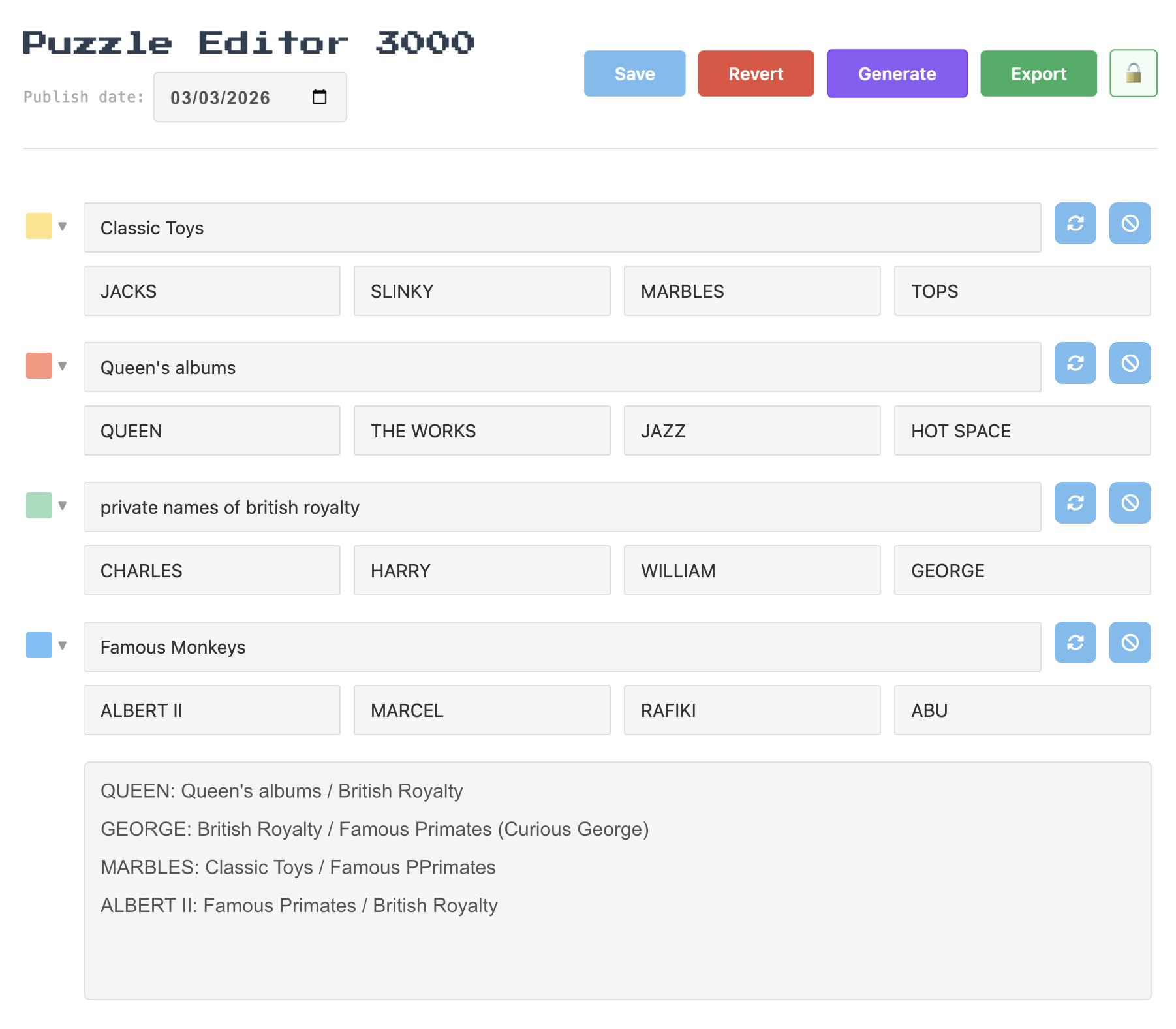
Puzzle Editor 3000: generate, curate, and track puzzle mechanics in one place.
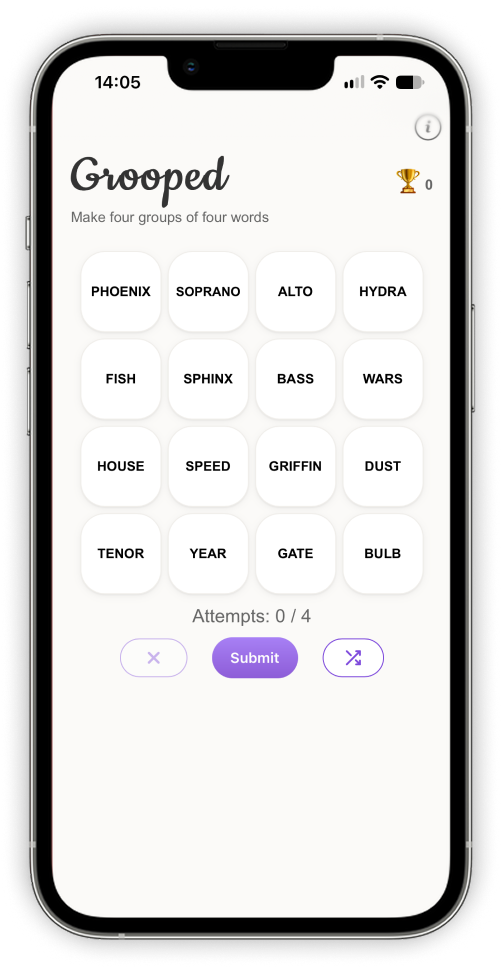
None of the pipeline is visible to the player. They get 16 words and four attempts. The mechanic, the tier, the cooldowns. All invisible. The only thing that matters is whether the puzzle feels satisfying to solve.
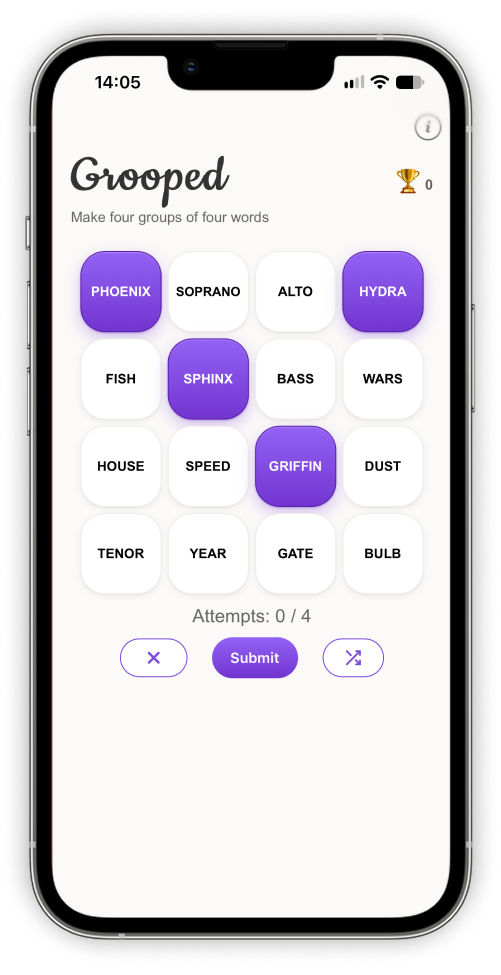
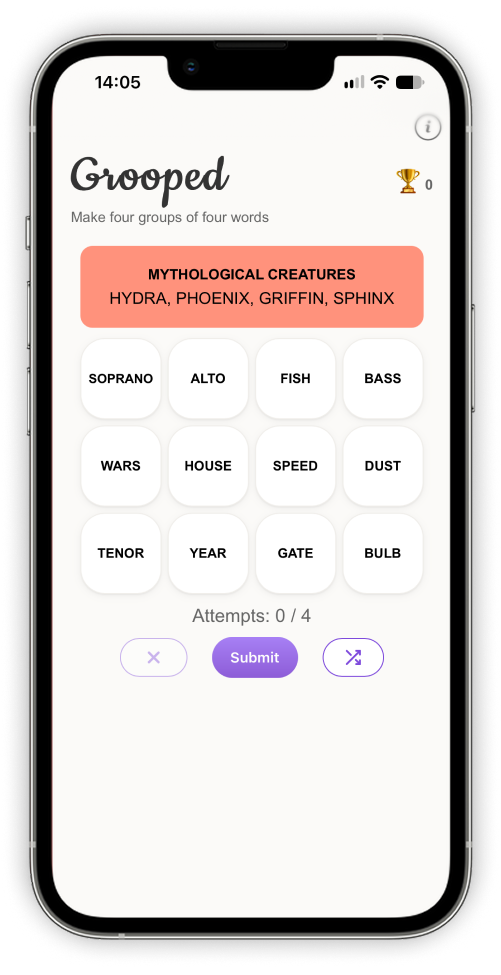
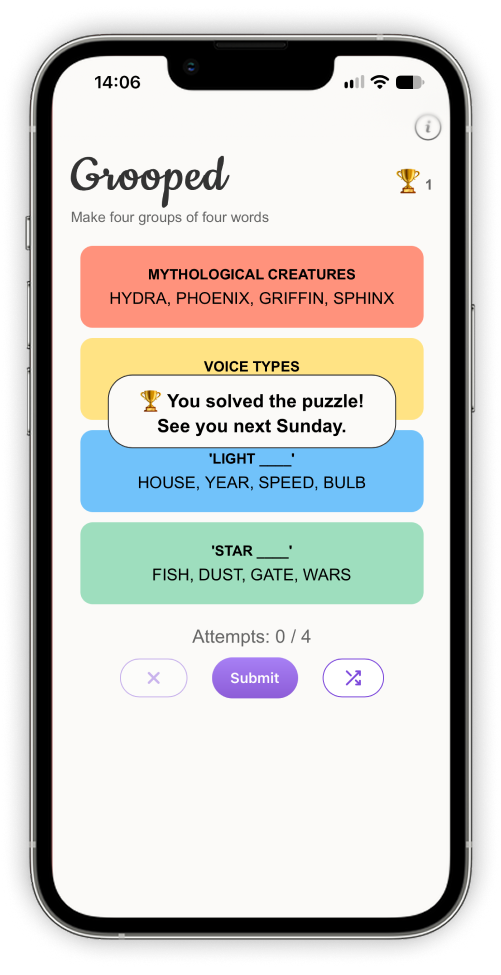
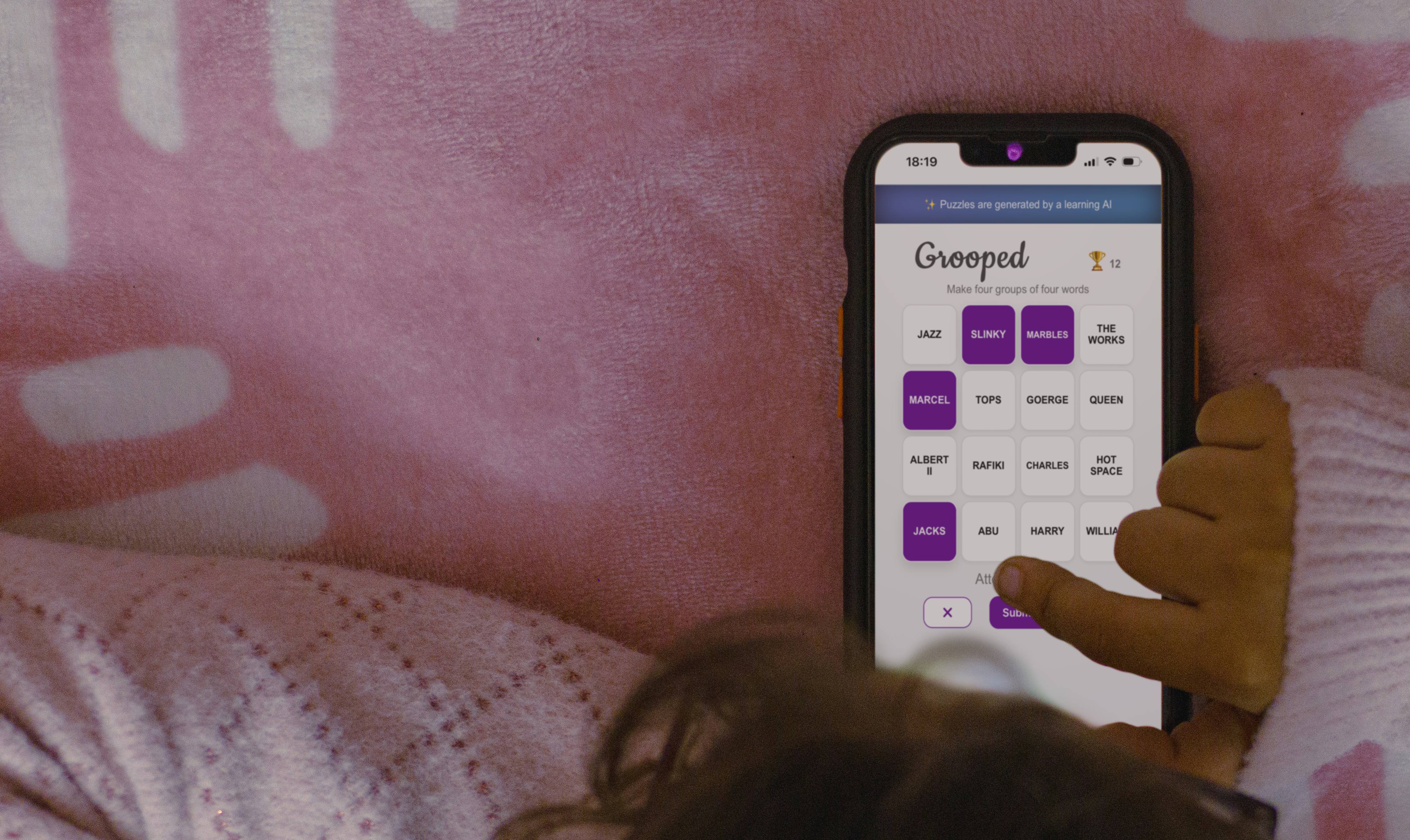
I connected Microsoft Clarity to track how people actually play. People play fast and lose patience faster. A couple of wrong guesses and some players just leave. That insight pushed me to make puzzles more solvable.
"I believe in seeing what people do, not asking what they would do."
Microsoft Clarity session recording: tracking real player behavior.
I ran Grooped daily for nearly 200 puzzles. Every one started with me: prompting, curating, checking the board, publishing. The pipeline did the heavy lifting, but the judgment call on each puzzle was still mine.
Around puzzle 200, with summer coming, I did the math on my own time and made a call. A daily puzzle I have to force out is worse than a weekly one I actually want to make. So I moved Grooped to weekly.
A daily streak is a vanity metric. Sustaining the quality bar is the real one. Scaling the cadence back kept the project alive and kept every puzzle worth playing, instead of quietly letting it slip or shipping worse puzzles to protect a number.
Curious? Give it a try.